Natural Dales Wool Products
The idea
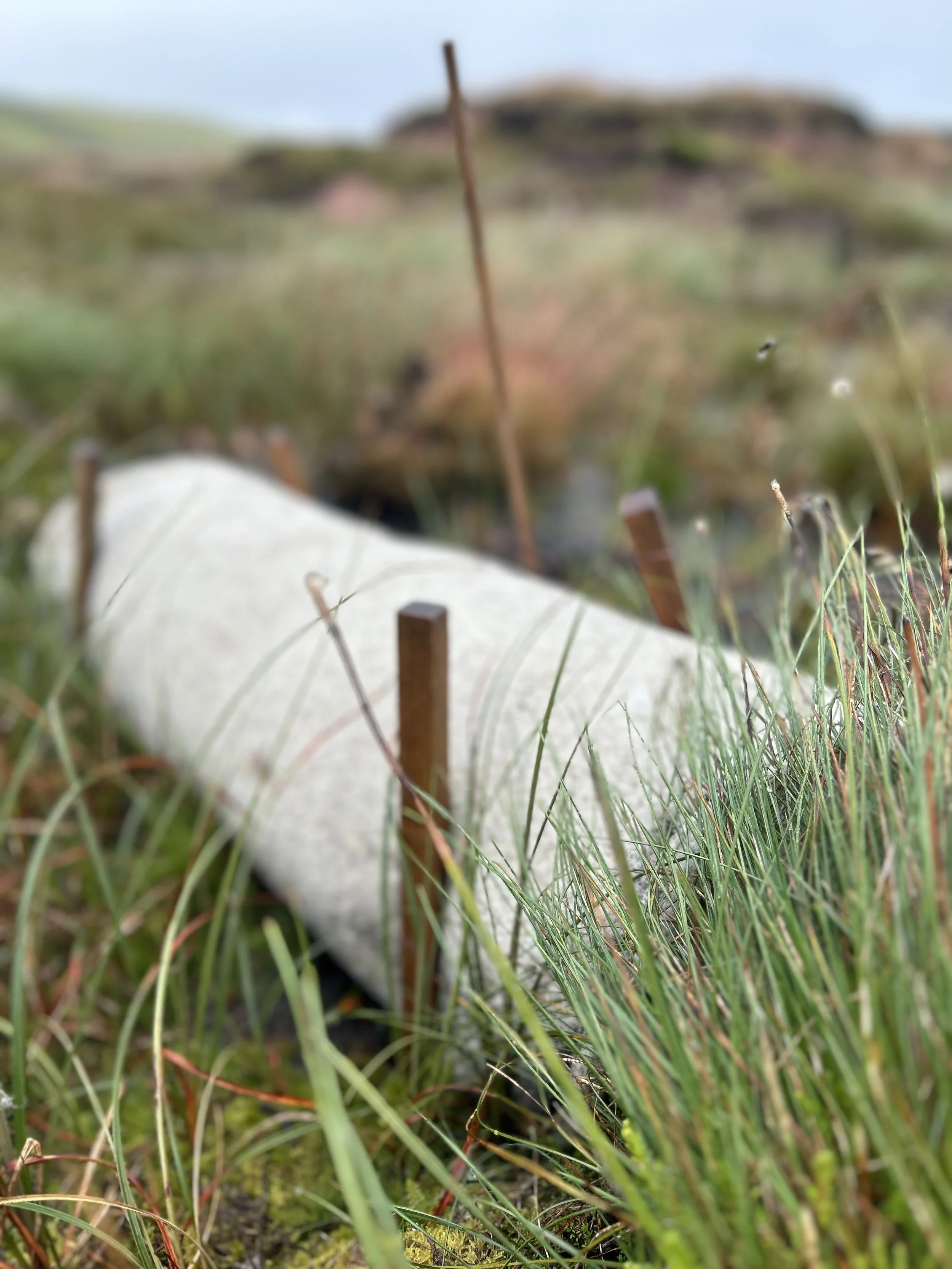
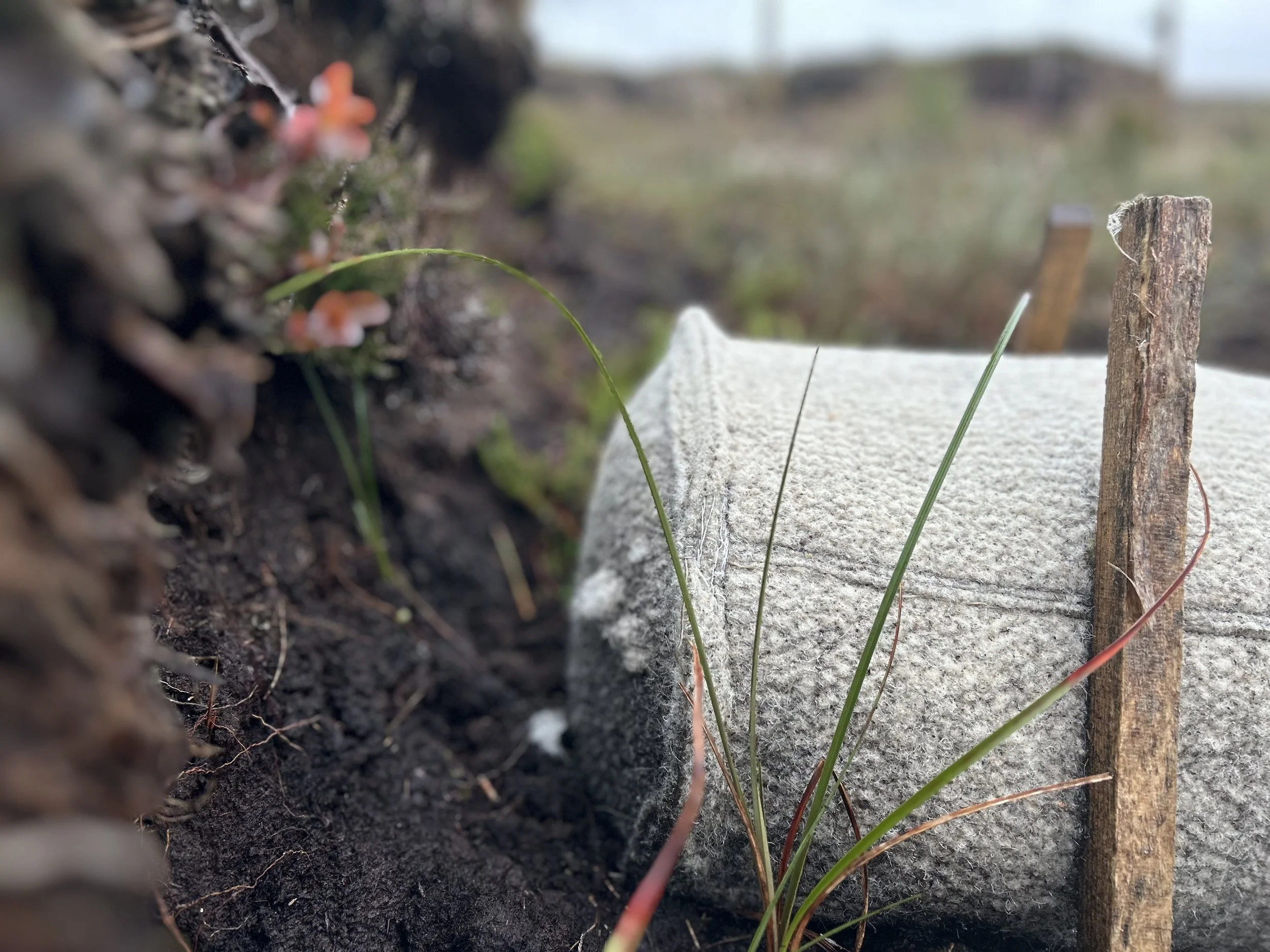
As demand for wool has declined—especially among hill and mountain breeds—its market value has dropped, making it harder for farmers to cover shearing costs. Ruth Lindsey founded Natural Dales Wool Products in August 2021 to tackle this issue by developing wool logs as a sustainable alternative to coconut fibre logs used in peatland restoration. The idea was sparked when Ruth saw hundreds of coconut fibre logs being flown onto Staggs Fell in Upper Wensleydale behind her house in the Yorkshire Dales. Could a sustainable wool equivalent be developed paying farmers a higher price for their fleeces and contributing a meaningful amount to the cost of shearing?
Ruth explains: “ Wool’s natural properties—moisture absorption, UV resistance, fire resistance, and biodegradability—made it an obvious choice to replace coconut fibre logs. At a time when farmers are struggling to cover the costs of shearing, returning wool to the land it came from creates a sustainable cycle where everyone benefits.” This innovative approach not only adds value to underused wool but also supports local agriculture and contributes to ecological restoration.
The design journey
Ruth Lindsey joined forces with Jo Dawson, owner of H Dawson, forming a ground breaking partnership that significantly scaled up production. This colaboration enabled wool log output to increase twelvefold, meeting rising demand and alowing instalations across key restoration sites including the Yorkshire Dales, North York Moors, the High Peak in Derbyshire, and the Cairngorms National Park in Scotland. Ruth also coordinates a large scale project with the South West Peatland Partnership, using localy sourced Devon wool for restoration efforts in Dartmoor. “The challenge for me,” Ruth explains, “was working out a production route to make an equivalent to a coir log at a competitive price. The next step was to obtain permission from Natural England for its use for restoration on peatland including Sites of Special Scientific Interest without which the product would not be accepted by peat partnerships for trials on the land. The next challenge is scaling up to make it a commercially viable business: growing it from kitchen table to the world!”
The solution
Results have shown that wool logs integrate well into the landscape. They effectively retain water within the log and help hold back water and peat, supporting the restoration of degraded land. Unlike coir logs, wool logs are not eaten by red deer, and corvids tend to leave them alone after initial curiosity—making them more durable and resilient in the field. Looking ahead, Ruth shared her excitement about future developments: “I’m excited about what’s to come. I’m currently working on a trial at Farlington Marshes in Hampshire, in collaboration with JBA Consulting and the Environment Agency, to explore how wool logs can help prevent erosion of the embankment and to accrete sediment. It’s early days, but the potential for a nature-based solution to protect our shorelines is a really exciting prospect”
More about Ruth
Ruth is the 4th Generation born into a Bradford Textile family who manufactured Industrial Textiles from the mid 1890's: multilayer oil seed press matting from wool, mohair, camelhair, and horsehair which were al exported to the Middle East. Industrial textiles are her area of expertise.
Natural Dales Wool Products was formed by Ruth Lindsey in August 2021 to develop wool logs as a replacement for coconut fibre logs being used in peat restoration.
-
As demand for wool has declined—especially among hill and mountain breeds—its market value has dropped, making it harder for farmers to cover shearing costs. Ruth Lindsey founded Natural Dales Wool Products in August 2021 to tackle this issue by developing wool logs as a sustainable alternative to coconut fibre logs used in peatland restoration. The idea was sparked when Ruth saw hundreds of coconut fibre logs being flown onto Staggs Fell in Upper Wensleydale behind her house in the Yorkshire Dales. Could a sustainable wool equivalent be developed paying farmers a higher price for their fleeces and contributing a meaningful amount to the cost of shearing? Ruth explains:
“ Wool’s natural properties—moisture absorption, UV resistance, fire resistance, and biodegradability—made it an obvious choice to replace coconut fibre logs. At a time when farmers are struggling to cover the costs of shearing, returning wool to the land it came from creates a sustainable cycle where everyone benefits.”
This innovative approach not only adds value to underused wool but also supports local agriculture and contributes to ecological restoration.
-
Ruth Lindsey joined forces with H Dawson, forming a ground breaking partnership that significantly scaled up production. This colaboration enabled wool log output to increase twelvefold, meeting rising demand and alowing instalations across key restoration sites including the Yorkshire Dales, North York Moors, the High Peak in Derbyshire, and the Cairngorms National Park in Scotland. Ruth also coordinates a large scale project with the South West Peatland Partnership, using localy sourced Devon wool for restoration efforts in Dartmoor.
-
Results have shown that wool logs integrate well into the landscape. They effectively retain water within the log and help hold back water and peat, supporting the restoration of degraded land. Unlike coir logs, wool logs are not eaten by red deer, and corvids tend to leave them alone after initial curiosity—making them more durable and resilient in the field.
add Ruth’s quotes